
Table Of Content
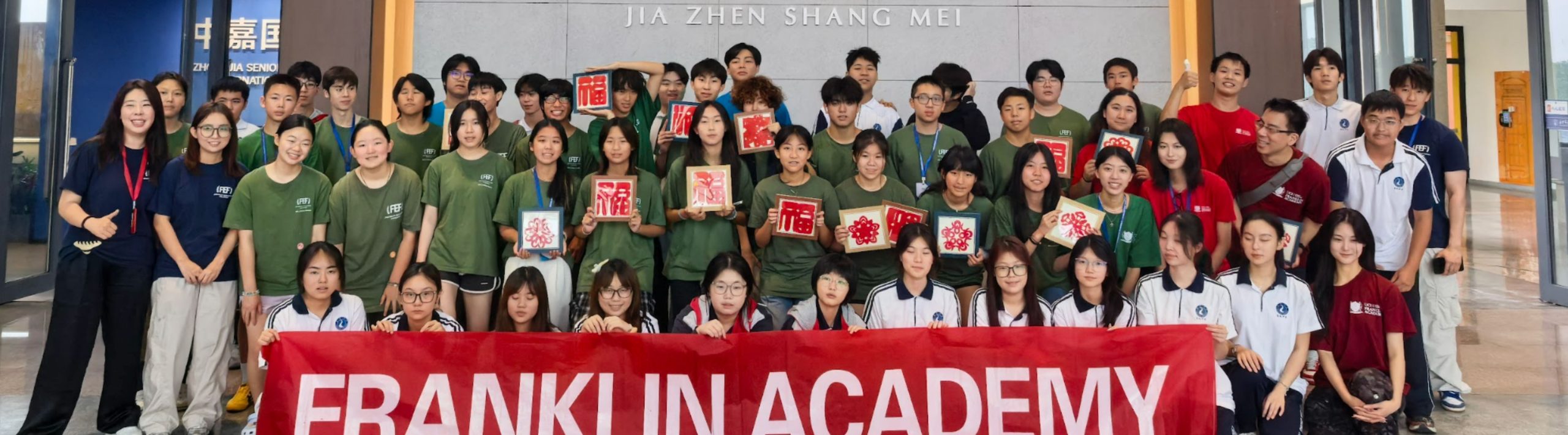
The 2025 Summer Session 1 of the China Microfinance Rural Poverty Alleviation Project began as a journey into Hunan, but it quickly became something deeper: a hands-on global leadership experience where students learned through culture, community, field interviews, microfinance research, teamwork, and reflection.
Provided by Franklin Education Foundation under the Global Philanthropy Leadership Program, the project invited students to step beyond the classroom and enter real communities with curiosity and respect. Instead of studying rural development only through lectures or case studies, students walked through historic learning spaces, met local families, participated in village life, interviewed community members, explored cultural heritage, and transformed their observations into final field research presentations.
For many students, the experience was not only about discovering a new place. It was about learning how global leadership feels when it is practiced slowly, thoughtfully, and face to face.
A Global Leadership Experience Built on Human Connection
A meaningful global leadership experience should not only teach students about service, culture, or social impact from a distance. It should place them in environments where leadership becomes personal and real.
During 2025 Summer S1, students were challenged to move beyond familiar routines and enter a community with humility. They were not there to observe from the outside. They were there to listen, participate, ask questions, and understand how culture, family, work, and financial opportunity are connected.
This kind of learning requires more than confidence. It requires patience. Students had to slow down enough to notice details, respect local rhythms, and understand that community impact begins with trust.
From the beginning, the session made one idea clear: leadership is not only about speaking. It is also about learning how to be present.
Where History and Innovation Set the Tone
The journey began with a powerful contrast between China’s educational history and its modern innovation.
At Yuelu Academy, students walked through a place shaped by centuries of scholarship, cultural memory, and Confucian tradition. The setting invited them to think about education as something larger than assignments or grades. It connected learning with discipline, values, history, and responsibility.
Later, students explored a modern academic and design environment connected to Hunan University, where they encountered examples of human-centered innovation, intelligent design, robotics-related technology, wearable devices, and healthcare prototypes. The shift from historic academy to modern research space gave students a broader understanding of China’s development.
This contrast helped frame the rest of the project. Students began to see that meaningful global leadership requires both respect for the past and openness to the future. Rural development, microfinance, technology, culture, and education are not separate topics. They are part of the same larger question: how can young people understand change responsibly?
Learning Through the Rhythm of Daily Work
As students settled into the village environment, they began participating in small but meaningful tasks connected to daily life.
They helped local families prepare and sort fresh-picked herbs, working side by side in village homes and kitchens. These moments may have seemed simple at first, but they carried a quiet kind of learning. Students could feel the pace of rural work, the care behind household routines, and the patience required in tasks that support family and community life.
The learning was not only in what students were told. It was in what they noticed.
They noticed how people worked together. They noticed how conversations unfolded naturally while hands stayed busy. They noticed the warmth of local families and the difference between reading about rural life and sitting inside it.
This is where the global leadership experience became immersive. Students were not just collecting information about a community. They were beginning to understand how a community lives.
Field Interviews That Taught Students to Listen
The field interview process became one of the most important parts of the session.
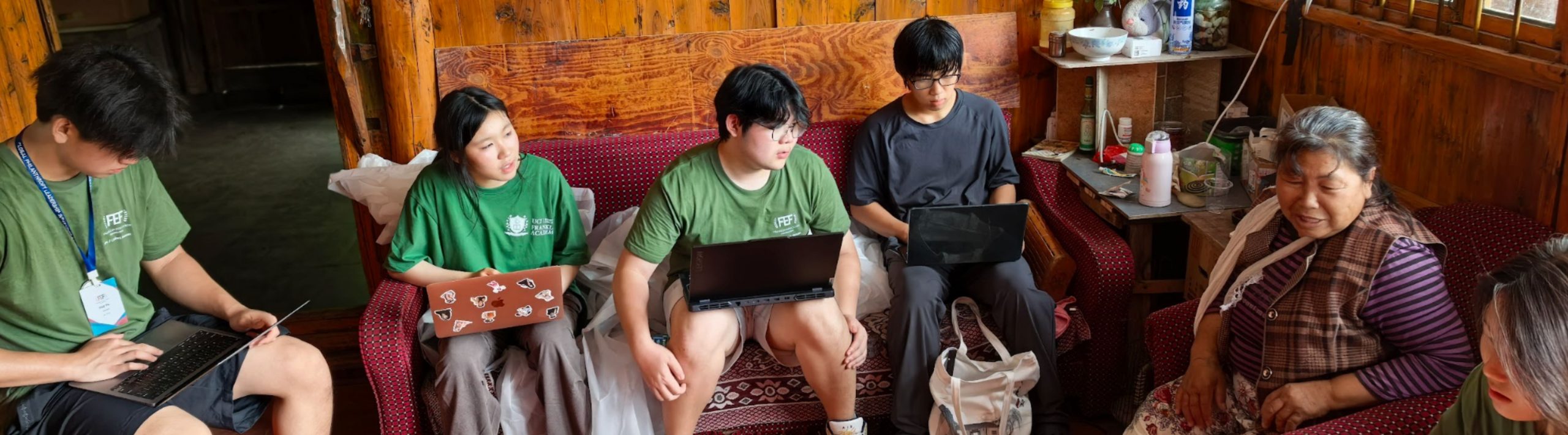
Students met with elders, farmers, cooperative leaders, and community members to learn about family life, income sources, support systems, agricultural work, local industries, and the role of microfinance in rural development. These conversations required maturity. Students had to ask questions carefully, listen with patience, and understand that every answer represented a person’s real experience.
Some interviews happened in homes. Others took place in porches, community rooms, or informal village spaces. Students had to adapt to local communication styles, unfamiliar surroundings, and topics that required sensitivity.
The interviews helped students understand that field research is not always neat or predictable. A meaningful answer may come through a long story. A small detail may reveal something important. A pause may matter as much as a sentence.
Through this process, students learned that leadership does not begin with conclusions. It begins with listening closely enough to understand what questions should come next.
Turning Community Stories Into Global Leadership Insight
After the interviews, the work continued.
Students reviewed notes, organized observations, discussed what they had heard, and began turning personal stories into research insight. This stage helped them understand that fieldwork does not end when a conversation is finished. The real learning often begins afterward, when students sit with their notes and ask what the experience means.
They had to think about patterns across different households. They had to connect income sources, family responsibilities, local industries, financial needs, and long-term goals. They also had to consider how microfinance could be understood not as an abstract economic concept, but as something connected to real households and real decisions.
This process asked students to become more disciplined thinkers.
They could not simply repeat what they heard. They had to interpret it carefully. They had to decide what they understood, what they still needed to clarify, and how their findings could be shared respectfully.
That is why this project worked as a global leadership experience. It gave students the chance to practice leadership through research, empathy, and evidence-based thinking.
Cultural Immersion That Gave the Project Heart
Culture was not treated as a side activity during 2025 Summer S1. It became one of the most meaningful ways students came to understand the community.
Through Yao-style tie-dyeing and embroidery, students experienced tradition with their own hands. Each fold, stitch, pattern, and color helped reveal the patience and memory behind local craftsmanship. These activities made culture feel alive, not distant.
Students also learned from local artisans and community members who helped them understand the importance of cultural preservation. Through those moments, students began to see that rural communities are not defined only by economic needs or development challenges. They are also shaped by creativity, identity, family memory, and pride.
This cultural layer gave the project emotional depth.
A student may remember the facts from an interview, but they may also remember the feeling of learning a craft from someone who has practiced it for years. They may remember the colors of fabric, the movement of hands, the care in a demonstration, or the quiet confidence of a local artisan sharing a tradition.
These moments helped students understand that community impact must protect dignity, not just solve problems.
Small Moments That Made the Experience Memorable
Some of the most powerful parts of the session were not always the largest scheduled activities.
They were the smaller moments between interviews, workshops, and cultural experiences. A shared laugh during a hands-on activity. A conversation during household work. A birthday celebrated far from home. A handmade gesture. A quiet evening spent reviewing notes after a full day in the village.
These moments helped students build emotional connection with the place, with one another, and with the people they met.
Leadership often grows in these small spaces. Students learn how to support a teammate, how to adapt when something feels unfamiliar, how to show gratitude, and how to remain open when they do not fully understand a situation yet.
A strong global leadership experience should create room for these moments because they help students grow in ways that are difficult to measure. They build care, awareness, flexibility, and maturity.
Microfinance Learning With Real Human Context
The microfinance component gave students a practical framework for understanding rural poverty alleviation.
Through workshops, interviews, and community engagement, students explored how household planning, income, risk, financial support, and local business development can affect rural families. Microfinance was not presented only as a definition. Students saw how financial decisions are connected to real work, real families, and real futures.
As they listened to farmers and community members, students began to ask deeper questions. How does a household decide whether to invest in a new opportunity? What risks shape rural business decisions? How can financial support help families become more stable? What does responsible service look like when the goal is long-term community development?
These questions helped students connect financial thinking with empathy.
That connection matters. Numbers can explain part of a story, but they cannot replace the human experience behind the data. By learning microfinance in a real community setting, students began to understand why responsible leadership must consider both analysis and people.
Teamwork That Required Patience and Ownership
Throughout the session, students worked in teams to prepare interviews, organize notes, discuss findings, and build final presentations.
This teamwork was not always simple, and that was part of the learning. Students had to manage different opinions, different communication styles, and different levels of confidence. They had to divide responsibilities, support one another, and stay focused even when the work became tiring.
In a classroom, teamwork can sometimes feel like a group assignment. In the field, it feels different. The information students gathered depended on how well they prepared. The quality of their analysis depended on how well they listened to one another. Their final presentation depended on the team’s ability to bring many pieces of experience into one clear message.
This gave students a practical understanding of global leadership.
They learned that leadership is not always about being in front. Sometimes it means organizing quietly, helping a teammate, asking a clarifying question, or making sure the group does not lose sight of the purpose.
From Field Research to Final Presentations
In the final stage of the session, students transformed their immersive learning into field research presentations.
By that point, they were carrying many layers of experience: interview notes, village memories, cultural observations, microfinance ideas, and team discussions. Their challenge was to bring those pieces together into one clear story.
The final presentation became more than a summary of activities. It became a reflection of how students listened, what they noticed, and how their understanding of leadership had grown.
Students reviewed everything they had gathered and identified the insights that best represented their fieldwork. They organized community observations, financial concepts, cultural experiences, and team analysis into a message that could be shared with clarity and respect.
This final stage helped students practice public speaking, research communication, cross-cultural awareness, and teamwork. More importantly, it helped them understand that leadership includes the ability to communicate responsibly about people and communities.
By the end, students were not only presenting findings. They were presenting growth.
What Students Gained From This Global Leadership Experience
The 2025 Summer S1 experience gave students more than a collection of activities. It gave them a deeper understanding of themselves and the world around them.
Students built confidence by entering unfamiliar environments and learning how to adapt. They developed empathy by listening to community members and understanding different life experiences. They strengthened communication skills through interviews, team collaboration, and final presentations.
They also gained practical skills in research, financial literacy, microfinance thinking, public speaking, cultural understanding, and community engagement.
Most importantly, students began to understand global leadership as a daily practice. It showed up when they listened before making assumptions, when they worked through challenges with teammates, when they treated community stories with care, and when they turned experience into reflection.
That is what made the session meaningful. It did not ask students to perform leadership for a moment. It helped them practice leadership across an entire journey.
Final Reflection on Culture, Service, and Student Growth
The 2025 Summer S1 journey showed how global leadership can become transformative when it is grounded in real communities.
Students did not only study rural poverty alleviation. They listened to families, joined local traditions, explored microfinance, participated in cultural exchange, and learned how to turn experience into understanding.
They returned with more than notes, photos, and completed presentations. They returned with greater empathy, stronger confidence, and a clearer sense of how leadership can begin with care.
For families seeking a meaningful student development opportunity, the China Microfinance Rural Poverty Alleviation Project offers a powerful example of how fieldwork, culture, service, and reflection can shape confidence, character, and global awareness.