Table Of Content
A trilingual school gives students the opportunity to develop meaningful ability in three languages as part of a structured academic experience. Unlike a school that simply offers several world-language electives, a strong trilingual model creates a long-term pathway in which students continue building communication, literacy, cultural understanding, and academic language as they move through different grade levels.
For families, the idea can be exciting but also raise important questions. Can children really learn three languages at once? Does learning multiple languages create confusion? How is trilingual education different from bilingual education? And what should parents look for when choosing a school that claims to offer multilingual learning?
These questions matter because not every multilingual program is designed in the same way. Some schools introduce languages primarily through enrichment or electives. Others use immersion, content-based instruction, literacy development, or a combination of approaches. The most important difference is not how many languages appear on a school’s website, but whether students have a clear and consistent pathway for developing those languages over time.
At Franklin Academy, trilingual learning is built around English, Mandarin, and Spanish within a K–12 academic model. Students encounter multilingual learning from the elementary years and continue developing those abilities through middle and high school, where language study becomes increasingly academic and sophisticated. The goal is not simply exposure to three languages, but long-term growth in communication, literacy, cultural awareness, and academic expression. Franklin Academy’s middle school program, for example, describes trilingual learning as progressing from conversational fluency toward more advanced academic expression, while arts and choir programs also integrate English, Mandarin, and Spanish into student learning.
What Is a Trilingual School?
A trilingual school is an educational environment in which students intentionally learn and develop three languages as part of a structured school program. The exact model may vary, but meaningful trilingual education typically involves sustained language exposure, clear learning goals, opportunities for communication, and increasing expectations for reading and writing as students mature.
The word “structured” is especially important. A school does not become trilingual simply because it offers three language courses. If students study one language for a few months, another as an occasional enrichment class, and a third only during high school, that experience is very different from a coordinated K–12 multilingual pathway.
Strong trilingual school education shows students how their language learning develops from year to year. Younger students may focus more on listening, speaking, vocabulary, songs, stories, classroom routines, and early literacy. Middle school students can begin using languages for more complex reading, discussion, writing, and analysis. High school students may move toward advanced composition, literature, presentations, and college-level coursework.
The purpose is not necessarily to create identical proficiency in all three languages at every stage. Students may naturally become stronger in one language for academic writing, another for conversation, and another for reading. What matters is that all three languages have a meaningful role in the student’s long-term development.
How Is a Trilingual School Different From a Bilingual School?
The most obvious difference is numerical: bilingual education involves two languages, while trilingual education incorporates three.
But the educational difference goes beyond adding one more language to the schedule.
A bilingual immersion school may dedicate a large percentage of the school day to one target language and the remainder to English. This can create intensive exposure to the second language. A trilingual school has to distribute learning across three languages while maintaining strong core academics and ensuring that students continue progressing in each language over time.
That makes curriculum design especially important.
Parents should therefore avoid assuming that trilingual education is automatically “better” than bilingual education simply because it includes another language. A high-quality bilingual immersion program may offer deeper exposure to one target language than a poorly structured trilingual program.
The stronger question is whether the language model is intentional, academically coherent, and sustainable over many years.
For families interested in multilingual education, both bilingual and trilingual programs can offer valuable experiences. The best fit depends on the student’s language background, family goals, learning needs, and the quality of the specific school.
Why Learn Three Languages During K–12?
Learning three languages throughout the K–12 years gives students repeated opportunities to communicate across different linguistic systems and cultural contexts.
The benefits extend beyond being able to hold conversations in more than one language. Multilingual students regularly encounter differences in grammar, vocabulary, sentence structure, sound patterns, writing systems, and cultural conventions. These experiences can make students more conscious of how language works.
Research on multilingual education has linked extensive multilingual experience with stronger metalinguistic and cross-linguistic awareness, although outcomes vary significantly depending on context, instructional quality, and the amount of meaningful language use. In other words, simply adding languages to a curriculum does not guarantee a particular academic result. The learning environment matters.
The long-term nature of K–12 education is also important. Language proficiency develops gradually. A student may begin with simple communication in early elementary school and later become capable of reading literature, discussing abstract ideas, writing analytical responses, or presenting research.
This progression is difficult to achieve through short-term exposure alone.
A trilingual school gives students the possibility of treating language as an evolving academic skill rather than a temporary enrichment activity.
Why English, Mandarin, and Spanish?
Franklin Academy’s trilingual model centers on English, Mandarin, and Spanish. For students growing up in Southern California, this combination creates several distinct opportunities for communication and cultural learning.
English remains the primary language of academic instruction and higher education in the United States. Strong English literacy is therefore essential for reading, writing, research, communication, and college preparation.
Mandarin introduces students to a language with a very different linguistic and written structure. Students encounter tones, character-based writing, and patterns of expression that differ significantly from English. This can broaden their understanding of how languages represent meaning.
Spanish has immediate relevance throughout California and across much of the United States, as well as in Latin America and Spain. Students who study Spanish over many years may gain practical opportunities to communicate in their local communities as well as in international settings.
The value of this combination is not that these are objectively the only three languages worth learning. Different families may prioritize French, Korean, Hebrew, Arabic, Japanese, or other languages for cultural, academic, or personal reasons.
The strength of English, Mandarin, and Spanish as a school model lies in the range of linguistic and cultural experiences the three languages offer and in the opportunity to develop them consistently over many years.
Can Children Really Learn Three Languages at the Same Time?
Yes, children can learn multiple languages, but multilingual development does not always happen evenly.
A student may be strongest in English for academic writing, more comfortable speaking Mandarin with family members, and still developing Spanish reading skills. Another child may have the opposite pattern.
This variation is normal.
Language ability is shaped by exposure, frequency of use, quality of instruction, motivation, home environment, and opportunities for meaningful communication. Students develop the languages they regularly hear, read, write, and use.
A strong trilingual school should therefore set realistic expectations. The goal should not necessarily be for every student to have identical vocabulary, reading speed, and writing sophistication across three languages at every age.
Instead, the school should provide clear progression.
Younger students need repeated exposure and confidence using the languages. Older students need increasingly complex opportunities to read, write, analyze, and communicate.
The structure should grow with the student.

What Are the Academic Benefits of Trilingual School Education?
The academic value of trilingual school education comes partly from the way multilingual students have to think about language itself.
Students learning several languages regularly compare words, sentence patterns, grammatical structures, pronunciation, and meaning. They begin noticing that languages can communicate similar ideas in very different ways.
This can strengthen language awareness.
For example, a student who studies Spanish may begin recognizing cognates and word roots that connect to English. A student studying Mandarin encounters a character-based writing system that requires a different approach to literacy. Switching among these systems requires students to pay close attention to context.
Multilingual learning can also expose students to a broader range of texts, stories, historical perspectives, and cultural traditions.
However, parents should be cautious about exaggerated claims. Learning three languages does not automatically guarantee better grades, higher intelligence, or stronger standardized test performance.
Educational outcomes depend on many variables.
The strongest benefit is the development of sustained multilingual communication and the academic habits required to use several languages over time.
How Trilingual Learning Builds Language Awareness
One of the most interesting effects of studying several languages is that students begin noticing features of language they might otherwise take for granted.
English speakers rarely need to think consciously about English word order during normal conversation. Once students begin learning Spanish or Mandarin, however, they become more aware that other languages organize meaning differently.
They may notice how verbs change, how subjects are used, how questions are formed, or how tone can affect meaning.
These comparisons can make students more thoughtful readers and writers because language becomes something they actively analyze.
This awareness can also make future language learning less intimidating.
A student who already understands that languages have different grammar systems may approach a fourth language with greater flexibility than someone experiencing that difference for the first time.
How Trilingual Education Supports Cultural Awareness
Languages are not simply collections of vocabulary words.
They carry histories, traditions, social expectations, literature, humor, values, and ways of communicating.
A strong trilingual education program should therefore include opportunities for students to understand cultural context.
This may happen through literature, music, art, festivals, history, classroom discussion, performance, or community engagement.
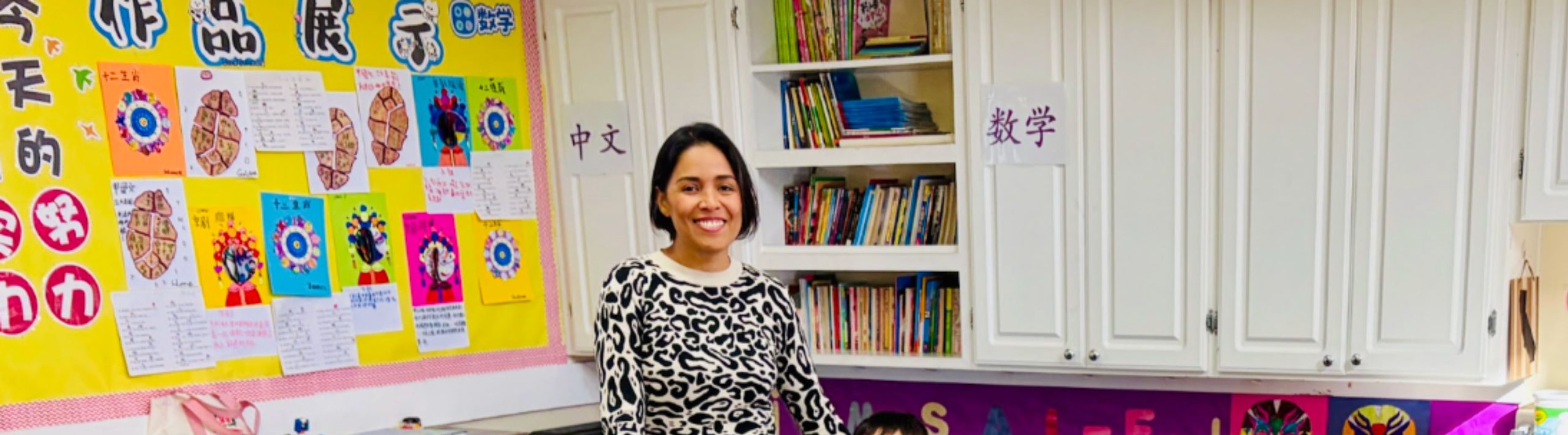
At Franklin Academy, multilingual learning extends beyond dedicated language classes. The school’s K–12 arts program, for example, integrates English, Mandarin, and Spanish into elementary creative activities, while its choir program includes repertoire in all three languages for younger students. These types of cross-disciplinary experiences reinforce the idea that language is part of cultural expression rather than an isolated academic subject.
Cultural awareness does not mean students become experts on an entire country or culture simply because they learn a language.
Instead, the goal is to develop curiosity and humility.
Students learn that communication is shaped by cultural context and that understanding another language can provide access to perspectives they might not encounter otherwise.
Why Starting Young Can Help
Young children often approach language differently from older learners.
They may be less concerned about making mistakes and more willing to repeat unfamiliar sounds, participate in songs, and imitate natural speech patterns.
This can make early childhood a valuable period for language exposure.
In elementary school, students can build vocabulary through stories, routines, visual materials, games, art, music, and classroom interaction. These experiences make language learning feel connected to daily life rather than limited to memorization.
However, starting early is only one part of the equation.
A student who begins a language at age five but stops at age nine may not develop long-term proficiency. By contrast, a student who begins later and continues studying consistently through high school may achieve significant competence.
The most effective language plan combines early exposure with long-term continuity.
What Trilingual Education Looks Like in Elementary School
Elementary school is where students build their foundation.
At this age, language learning should be engaging but also purposeful.
Students can develop listening and speaking through classroom routines, stories, conversations, songs, games, and interactive activities. Reading and writing should gradually become part of the program as students gain confidence.
Language can also be reinforced through other subjects.
Art, music, cultural studies, and project-based learning can give students additional ways to use vocabulary and concepts beyond a traditional language class.
At Franklin Academy, elementary arts and choir programming provide examples of this integration. Younger students encounter English, Mandarin, and Spanish through creative activities and music as part of their broader trilingual learning environment.
The goal is to make languages familiar and functional while laying the groundwork for more advanced literacy.
How Trilingual Learning Changes in Middle School
Middle school is a critical transition point.
Students are no longer beginning language learners in the same way they were during elementary school. Their academic thinking is becoming more sophisticated, and language instruction should reflect that growth.
Franklin Academy describes its middle school trilingual program as progressing from conversational fluency toward more advanced academic expression. Mandarin Chinese and Spanish Immersion appear as dedicated academic blocks in the middle school schedule, with extended class periods designed for sustained language practice.
This shift matters because conversational ability is only one dimension of proficiency.
Students also need to learn how to explain ideas, interpret texts, organize arguments, and communicate with greater precision.
Middle school is where trilingual education can begin moving from “I can speak this language” toward “I can use this language to think and communicate academically.”
That progression prepares students for the expectations of high school.
What Trilingual Education Can Look Like in High School
High school language education should become more intellectually demanding.
Students may read longer and more complex texts, develop formal writing, study literature and culture, give presentations, and use language in increasingly independent ways.
Advanced courses can also provide a clearer academic progression.
Students who have studied a language consistently since childhood may be prepared for more demanding coursework than students beginning from scratch in Grade 9.
At Franklin Academy, high school language study exists within a broader college-preparatory curriculum. Students can continue Mandarin and Spanish through advanced academic pathways rather than treating multilingual learning as something that ends after middle school.
This continuity is one of the defining features of a true K–12 trilingual model.
What Parents Should Look for in a Trilingual School
Parents should begin by asking how the three languages are actually used.
How much instructional time does each language receive? Are students developing reading and writing, or primarily conversation? Is the second or third language integrated into other subjects?
Families should then look closely at progression.
The Kindergarten program may sound engaging, but what happens later?
Does the school provide serious language instruction in middle school? Can students continue through high school? Are there advanced courses?
Parents should also ask how students are placed if they enter at different ages and how the school responds when proficiency levels vary.
Cultural integration is another factor.
Do students encounter literature, music, history, art, and traditions connected to the languages they study?
Finally, parents should evaluate academic quality beyond language.
The strongest trilingual school education combines multilingual learning with a comprehensive academic program.
A K–12 Trilingual Approach at Franklin Academy
Franklin Academy provides a K–12 model built around English, Mandarin, and Spanish.
The school’s approach is designed to evolve as students mature rather than offering the same language experience at every grade level.
In elementary school, students build early multilingual foundations through language instruction, classroom activities, creative learning, and cultural exposure. Arts and choir programming provide additional opportunities to reinforce English, Mandarin, and Spanish through hands-on and performance-based experiences.
In middle school, language expectations become more rigorous. Franklin Academy’s middle school program specifically emphasizes moving trilingual immersion beyond conversational ability toward stronger academic expression. Dedicated Mandarin Chinese and Spanish Immersion blocks give students extended opportunities for language practice alongside increasingly demanding core academics.
As students progress into high school, language learning continues within the context of college-preparatory academics. This gives students the opportunity to develop advanced communication and literacy rather than ending multilingual education after the elementary or middle school years.
The most important feature is continuity.
Students can begin their multilingual journey in Kindergarten and continue developing English, Mandarin, and Spanish as their academic thinking becomes more sophisticated through Grade 12.
How Trilingual Education Connects to Global Learning
Learning several languages can support a broader global education because language and perspective are closely connected.
Students who engage regularly with English, Mandarin, and Spanish encounter different cultural traditions, histories, literature, and forms of communication.
This can help them become more comfortable navigating unfamiliar perspectives.
That skill matters in an increasingly interconnected world.
Students may eventually study international business, technology, engineering, medicine, diplomacy, public policy, research, or global development. In many of these fields, the ability to communicate across linguistic and cultural boundaries can be valuable.
Language learning alone does not automatically create global leadership.
But it can give students a stronger foundation for understanding how people communicate, interpret ideas, and approach problems differently.
Trilingual Education Is a Long-Term Journey
A trilingual school is not defined simply by placing three languages on a course list.
Meaningful multilingual education requires continuity, progression, strong instruction, literacy development, cultural context, and opportunities for students to actually use the languages.
Young students may begin with songs, stories, classroom routines, simple conversation, and creative activities. As they grow, those early experiences can become more sophisticated reading, writing, discussion, presentation, and academic language.
The strongest trilingual programs understand that language development changes with age.
Elementary students need a foundation. Middle school students need increasingly complex academic communication. High school students need opportunities to continue developing advanced proficiency rather than leaving multilingual learning behind.
For families considering trilingual school education, the most important question is therefore not simply, “Does this school teach three languages?”
It is, “How will my child continue developing those languages from one stage of education to the next?”
At Franklin Academy, the K–12 model creates a continuous pathway through English, Mandarin, and Spanish while integrating multilingual learning with broader academics, arts, leadership, STEM, and college preparation.
For families seeking a trilingual school in Irvine, that long-term perspective can be especially important.
The ultimate goal is not simply for students to memorize vocabulary in three languages. It is to help them become stronger communicators, more flexible learners, and more culturally aware participants in a multilingual world.
Frequently Asked Questions About Trilingual Schools
What is trilingual school education?
Trilingual school education is an academic model in which three languages are incorporated into a student’s long-term learning experience. It may include language instruction, immersion, literacy, cultural learning, and opportunities to use the languages across different subjects or activities.
What is the difference between bilingual and trilingual education?
Bilingual education focuses on two languages, while trilingual education intentionally incorporates three. The quality of either model depends on instructional depth, exposure, literacy development, and continuity.
Can children learn three languages at the same time?
Yes. Children can develop several languages simultaneously, although they may have different strengths in speaking, reading, writing, and academic communication across each language.
Does learning three languages confuse children?
Multilingual learning does not automatically confuse children. Mixing or switching languages can be a normal part of multilingual development. Consistent exposure and clear instruction help students strengthen each language over time.
What are the benefits of trilingual education?
Potential benefits include broader communication ability, increased awareness of how language works, exposure to multiple cultural perspectives, and the opportunity to develop advanced multilingual literacy over many years.
What age is best to start trilingual education?
There is no single perfect age. Early exposure can help children become comfortable with unfamiliar sounds and communication patterns, but consistent long-term instruction is also essential.
Can students become fluent in three languages through school?
Students can develop substantial proficiency through a strong school program, but outcomes depend on instruction, exposure, student effort, and opportunities for meaningful language use. Parents should ask how the school measures progress rather than relying only on the word “fluency.”
Why does K–12 language continuity matter?
Continuity allows students to progress from basic communication toward advanced reading, writing, analysis, discussion, and academic expression. It also reduces the risk that language learning ends after elementary school.
Is there a trilingual school in Irvine?
Franklin Academy in Irvine offers a K–12 educational model that incorporates English, Mandarin, and Spanish throughout the student learning experience.
What languages does Franklin Academy teach?
Franklin Academy’s trilingual academic model incorporates English, Mandarin, and Spanish from its early grades through its broader K–12 pathway.