

Table Of Content
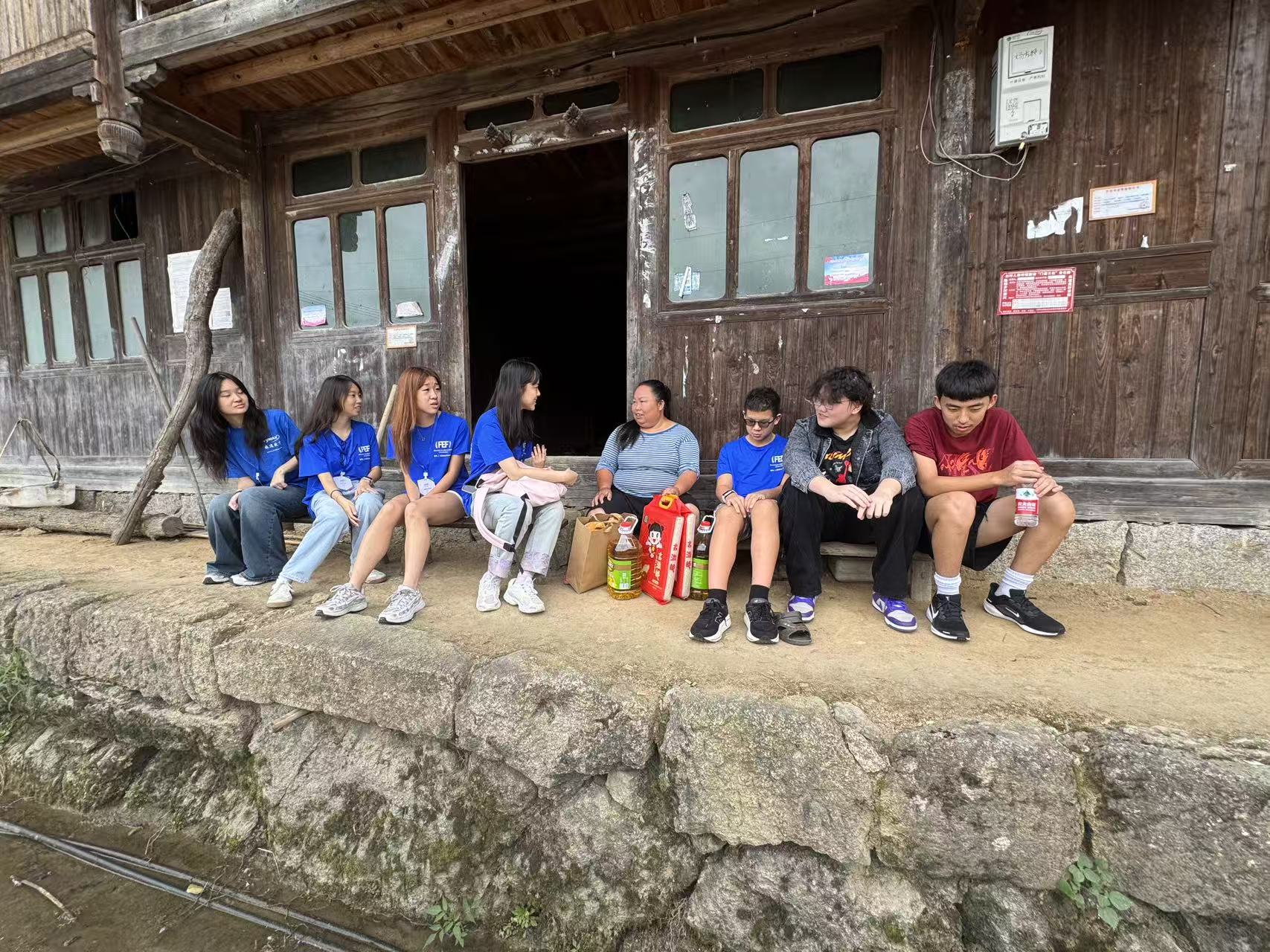
Leadership can be discussed in a classroom, practiced through school clubs, and studied through examples of influential people. But global leadership becomes much more concrete when students enter an unfamiliar community, work alongside people whose experiences differ from their own, and discover that meaningful problems rarely have simple answers.
That was at the heart of Franklin Academy’s 2026 China Microfinance Rural Poverty Alleviation Project, Session 2.
During this immersive global leadership program, students traveled to Hunan, China, where they explored rural communities, learned about microfinance and poverty alleviation, participated in field research, experienced local culture, interacted with students and community members, worked in teams, and transformed their observations into thoughtful recommendations and final presentations.
The locations and overall project framework were familiar to Franklin Academy’s China program, but every session develops its own identity. Different students notice different details. They ask different questions. They interpret conversations through different perspectives. They encounter different moments of uncertainty and make different connections between what they have studied and what they see around them.
For Session 2, one of the most important themes was learning to look beyond the obvious.
Students arrived with ideas about leadership, economics, poverty, community service, and China. Over the course of the program, those ideas became more complicated—and often more meaningful—as students learned directly from the communities around them.
The experience challenged participants to move from assumptions to questions, from observations to analysis, and from wanting to provide immediate answers to understanding why responsible leadership begins with context.
Entering Hunan With Questions Instead of Conclusions
Before arriving in rural China, students may already have had ideas about poverty alleviation, microfinance, agriculture, or economic development. In a classroom, these subjects can appear relatively straightforward because they are often introduced through definitions, diagrams, or statistics. Once students enter an actual community, however, those same concepts become connected to individual families, local resources, daily routines, and real financial decisions.
Students quickly discovered that households do not all face the same circumstances. Income can come from multiple sources, family responsibilities can affect business decisions, and local opportunities may depend on geography, education, market access, agriculture, skills, or community networks. The students’ task was therefore not to arrive with a ready-made solution, but to understand the environment carefully enough to make informed observations.
This approach changed the meaning of fieldwork. Instead of simply collecting information to complete an assignment, students began learning how context shapes social and economic decisions. A single answer could change the direction of the next question, and an observation made during a village visit could challenge assumptions formed before the trip even began.
Understanding Rural Development Through Real Communities
Rural development can be difficult to understand through statistics alone. Data can show patterns in income, employment, agriculture, or regional growth, but numbers cannot fully explain how families make daily decisions or how communities respond to changing economic conditions.
Through field experience, students began to see how work, family, education, agriculture, community relationships, and local opportunities operate together. This systems-level view helped them understand that poverty alleviation is rarely the result of one isolated intervention. Access to financial resources may matter, but sustainable development can also depend on skills, transportation, market demand, time, family obligations, and the ability to manage risk.
This made rural development a more complex but more meaningful subject. Students learned that responsible leadership requires understanding the system around a problem rather than focusing only on one visible symptom. A solution that works in theory may not work in practice if it does not reflect the local environment.
Learning Microfinance Beyond the Textbook
Microfinance was one of the central themes of the program and gave students a practical way to study the relationship between finance and community development. At a basic level, microfinance involves providing financial services to individuals or small businesses that may have limited access to traditional banking systems. In a poverty alleviation context, this can potentially support entrepreneurship, agriculture, household businesses, or other income-generating activities.
However, students also learned that providing money is not the same as creating a sustainable solution. A financial recommendation must consider how the funds would be used, whether the activity could realistically generate income, what risks might affect the plan, whether the household has the necessary resources, and whether repayment would be manageable.
By exploring these questions, students began thinking about financial evaluation, sustainability, and risk assessment in a much more practical way. They also learned that financial analysis cannot be separated from human circumstances. Behind every budget or proposal is a person or family whose goals, challenges, and responsibilities need to be understood.
Why Community Research Requires Context
Field research is more complicated than asking a prepared list of questions and recording the responses. Good research develops as students learn more. One answer may introduce a new topic, another family may describe a very different experience, and a community observation may reveal that the original question was too narrow.
Students learned that a single interview cannot represent an entire community. Individual stories are valuable, but responsible analysis requires students to distinguish between one household’s experience and a broader pattern. They also needed to consider context when interpreting financial or social information.
For example, an income figure alone may not reveal whether earnings are seasonal, stable, agricultural, supplemental, or dependent on outside conditions. A business idea may appear promising until students begin asking about customer demand, costs, transportation, time, or competition. These additional layers helped students move beyond surface-level research and toward a more thoughtful understanding of the community.
Turning Observations Into Better Questions
One of the most important developments during fieldwork occurred when students stopped relying only on the questions they had prepared before arriving. As they collected new information, they began creating better questions based on what they were actually seeing and hearing.
This shift is an important part of both research and leadership. At the beginning of any project, students naturally work with assumptions because they do not yet have complete information. Field experience tests those assumptions. An issue that initially seemed important may become less central after several conversations, while another factor that students barely considered may become essential.
Strong researchers are willing to change direction when evidence changes. In the same way, effective leaders do not defend an original idea simply because it came first. They remain curious, adjust their thinking, and allow new information to influence their decisions.
Cultural Immersion as Part of Global Leadership
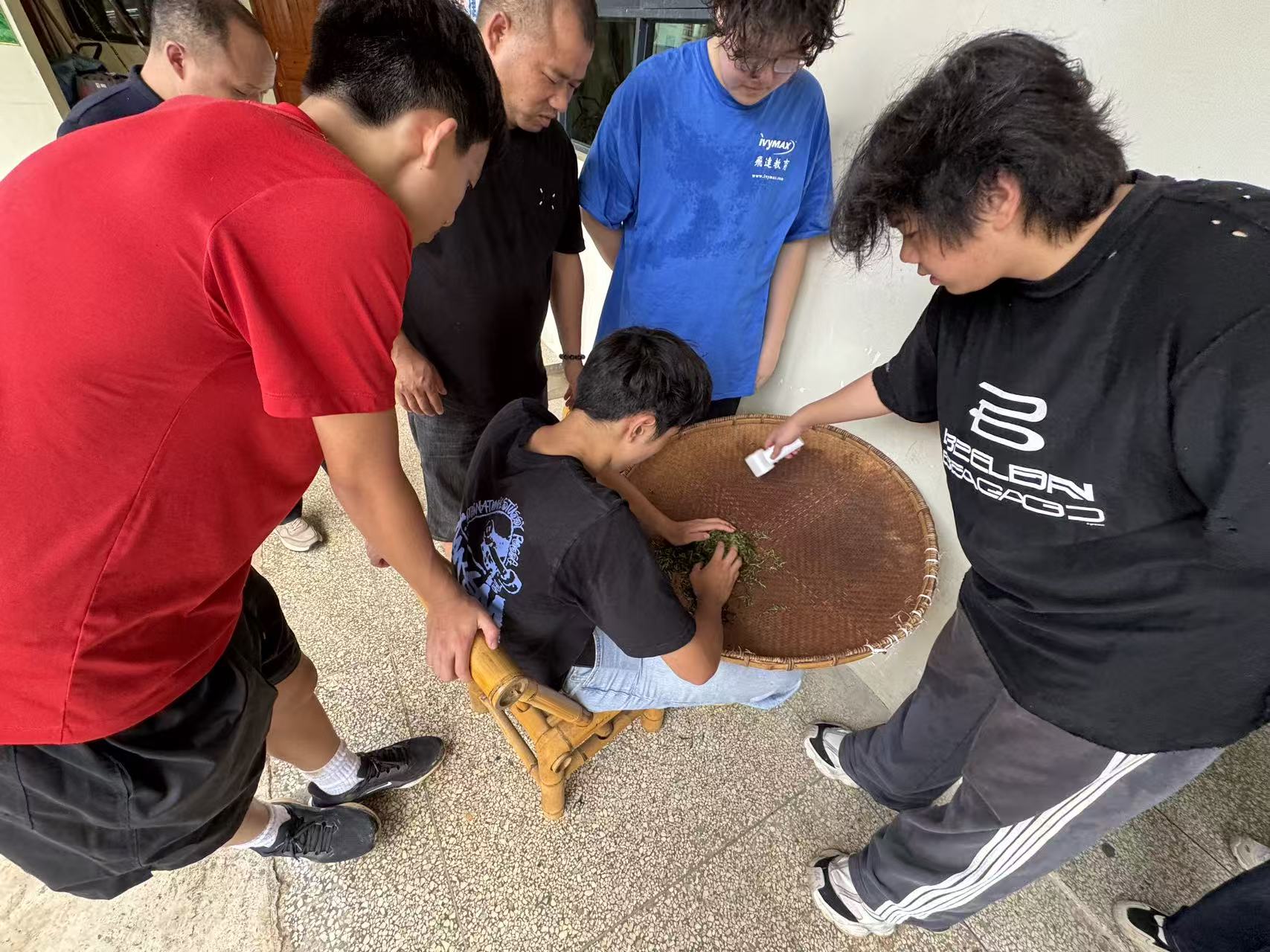
Cultural immersion was not separate from the academic purpose of the program. It was part of understanding the environment in which the students were conducting their work. Culture influences how people communicate, make decisions, relate to family, approach education, understand work, and participate in community life.
Students experienced local traditions, food, social interactions, and everyday environments. These experiences helped them recognize that recommendations cannot be separated from cultural context. A solution that seems logical from one cultural perspective may not automatically make sense in another.
This is one of the most important lessons in global leadership. Leaders working across cultures must develop the ability to observe, adapt, and understand how local values shape decision-making. Cultural immersion helped students recognize that effective solutions are not simply technically correct; they also need to fit the people and communities they are intended to support.
Learning From Everyday Life in Rural China
Some of the most valuable learning during an international program happens outside formal lessons. Students notice how communities move through the day, how people work, interact, share meals, communicate, and organize daily responsibilities. These ordinary moments can be just as important as structured fieldwork.
Through these experiences, students began to see rural China not as an abstract location or research topic, but as a collection of real communities and individual lives. They observed routines, relationships, and environments that may have differed significantly from what they were accustomed to at home.
This helped make the issues they were studying more personal. Poverty alleviation, microfinance, and rural development became connected to people rather than remaining theoretical concepts. That change in perspective is an important part of global learning because it encourages students to think about social issues with greater depth and responsibility.
School Exchange and Cross-Cultural Communication
Interactions with local students created another important layer of the experience. Students from different cultural and linguistic backgrounds may initially assume that communication will be difficult, but shared activities, school experiences, interests, and curiosity often create common ground very quickly.
These exchanges allowed students to practice cross-cultural communication in a natural setting. They learned to listen more carefully, pay attention to tone and body language, explain themselves in different ways, and remain patient when communication was not immediate.
For a global leadership program, this kind of interaction is especially valuable. Global leadership does not require people to have identical backgrounds or perspectives. It requires the ability to collaborate, build relationships, and communicate respectfully across differences.
Teamwork as a Real Leadership Challenge
The China Microfinance Project required students to work in teams, and teamwork became one of the most practical leadership lessons of the program. Different students brought different strengths to the project. Some focused closely on financial information, others noticed details in family stories, and others were especially strong at organizing ideas or preparing presentations.
These differences could strengthen the group, but only when students learned to combine them effectively. Teamwork required students to communicate what they had learned, listen to other interpretations, divide responsibilities, and make shared decisions.
At times, students could observe the same situation and reach different conclusions. Rather than treating disagreement as a problem, teams had to discuss the evidence and determine which interpretation was best supported. This helped students understand that leadership is not simply taking charge. It often means helping a group move from multiple perspectives toward a thoughtful collective decision.
From Microfinance Data to Real-World Problem-Solving
Collecting information was only the first step. Students eventually needed to determine what that information meant and how it might inform a realistic recommendation.
This required them to connect financial data, household circumstances, local opportunities, potential risks, and community observations. A creative idea still needed to answer practical questions. Would it work? Would it create sustainable value? What resources would it require? What could prevent it from succeeding?
Students learned that an impressive-sounding solution is not necessarily a useful one. In many cases, a simpler recommendation that fits actual community needs can be stronger than an ambitious proposal built on weak assumptions.
This is one of the most important lessons in responsible leadership. The goal is not to create the most dramatic solution. The goal is to understand the problem well enough to recommend something that is realistic, relevant, and supported by evidence.
Why Simple Solutions Often Fail in Complex Communities
Social and economic problems rarely exist in isolation. A family seeking to increase income may also face challenges related to transportation, agricultural conditions, market access, education, health, family responsibilities, or local demand.
This systems perspective encouraged students to think beyond the immediate issue. Instead of asking only what kind of financial support could be provided, they began considering what conditions would need to exist for that support to create sustainable results.
That is a much more demanding form of problem-solving because it requires students to think about cause and effect, unintended consequences, and the relationship among different factors. These habits are valuable far beyond microfinance and can be applied to many global issues, including public health, education, climate change, urban development, and economic inequality.
Reflection Turned Experience Into Learning
An international program can contain many new experiences in a short period of time, but activity alone does not guarantee learning. Reflection helps students turn what they experienced into something more meaningful.
After fieldwork and community interaction, students had opportunities to consider what surprised them, which assumptions changed, what information they were still missing, and how their understanding developed over time. They could also compare their own observations with those of their teammates.
This kind of reflection encouraged intellectual growth. Students were not expected to leave believing they had solved every issue. In many cases, recognizing the limits of their understanding became an important part of the experience. Leaving with better questions can be more valuable than leaving with overly simple answers.
How Global Leadership Grows Through Responsibility
Leadership is often associated with authority, but responsibility offered a more useful definition during this program. Students had responsibilities to their teammates, to the accuracy of their research, to the communities they encountered, and to the conclusions they presented.
They learned that real people should not be simplified for the sake of an easy story. They also learned that confidence should not replace evidence and that uncertainty should not automatically be hidden.
These lessons are central to global leadership. Sometimes leadership means making a decision. At other times, it means asking another question, gathering more information, or admitting that the situation is more complicated than expected.
Why International Experience Can Change How Students See Leadership
At home, students operate within familiar cultural expectations. They understand many of the unwritten rules around school, communication, family, food, and social interaction. International experiences interrupt that familiarity and require students to observe more carefully.
Students may not immediately understand why something is done in a particular way, and they may need to ask questions before forming an opinion. This helps them realize that their own perspective is valuable but not universal.
That awareness is a foundation of global leadership. Students learn to bring their own experiences into a conversation while remaining open to other viewpoints. This ability can become increasingly important in universities, workplaces, international organizations, and communities where collaboration often crosses cultural boundaries.
From Summer Experience to Long-Term Growth
The value of the program does not end when students return home. A meaningful summer experience can create new academic interests and questions that continue well beyond the trip.
Some students may become more interested in economics, business, finance, or development studies. Others may want to explore international relations, public policy, sociology, social entrepreneurship, or community service. Students may also continue developing practical skills such as research, public speaking, teamwork, and project management.
The strongest outcome is not simply being able to say that they participated in an international program. It is using the experience as a starting point for deeper learning, more thoughtful questions, and continued engagement with the issues they encountered.
Frequently Asked Questions About Global Leadership Programs
What is a global leadership program for high school students?
A global leadership program for high school students is an educational experience that combines leadership development with international learning, cultural engagement, teamwork, research, and real-world problem-solving. Students learn how to communicate across differences, analyze unfamiliar situations, and understand global issues through direct experience.
How does the China Microfinance Project teach leadership?
The China Microfinance Project teaches leadership by asking students to study real questions related to rural development and microfinance. Students gather information, evaluate local circumstances, work collaboratively, develop recommendations, and communicate their conclusions.
What do students learn about microfinance?
Students learn how microfinance can support individuals or small businesses that may have limited access to traditional financial services. They also explore risk, feasibility, repayment, sustainability, business planning, and the importance of understanding local circumstances before proposing financial solutions.
Why is cultural immersion important for global leadership?
Cultural immersion helps students understand that social and economic decisions are shaped by local values, communication styles, traditions, family structures, and community expectations. This awareness can help students become more thoughtful and adaptable leaders.
What skills can students develop through international fieldwork?
Students can strengthen critical thinking, research, teamwork, communication, public speaking, adaptability, financial analysis, problem-solving, cultural awareness, and independent learning.
Is the China program mainly a travel program?
No. Travel provides the setting, but the educational focus includes microfinance, rural development, community engagement, field research, cultural learning, leadership development, teamwork, reflection, and final project communication.
Can a global leadership program support future academic interests?
Yes. The experience may help students explore interests in economics, business, finance, international relations, public policy, sociology, social entrepreneurship, development studies, or other globally focused fields.
Does a global leadership program help with college preparation?
A global leadership program can help students strengthen independence, research, communication, teamwork, critical thinking, and project management. Its long-term value is strongest when students continue exploring the ideas and skills they developed after the program ends.
Global Leadership Starts With Understanding
The 2026 China Microfinance Rural Poverty Alleviation Project Session 2 showed that leadership development does not always begin with leading others. Sometimes it begins with learning how to understand.
Students entered communities where they needed to observe before recommending, ask questions before reaching conclusions, and reconsider assumptions when new evidence appeared. Microfinance gave them a practical framework for exploring economics and development, while community engagement connected those ideas to real people and circumstances.
Through cultural immersion, teamwork, field research, analysis, reflection, and presentation, students experienced leadership as something more thoughtful than simply taking charge. They learned that effective leadership depends on curiosity, responsibility, cultural awareness, collaboration, and the ability to keep learning.
For Session 2, the destination may have been familiar, but the perspective, questions, and growth belonged entirely to this group.